

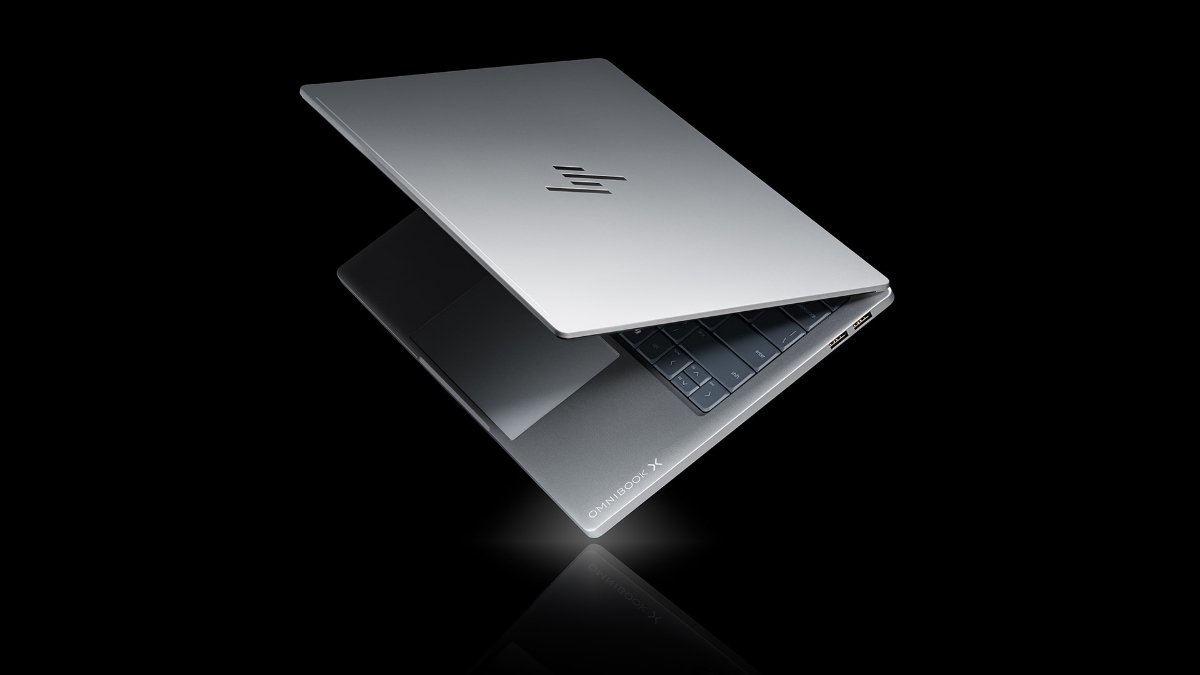
TL;DR: High-end AI development and premium 4K gaming currently demand bulky, power-hungry laptops that tether users to a wall outlet and destroy portability. The Solution: The upcoming HP OmniBook Ultra 16 and HP OmniBook X 14, powered by the Arm-based NVIDIA RTX Spark (N1X) superchip. By fusing a Blackwell-architecture RTX GPU with a custom NVIDIA Grace CPU, these machines deliver up to 1 Petaflop of local FP4 AI compute and native CUDA development support inside the world’s thinnest, all-day-battery form factors.
For years, creators, developers, and gamers have been forced to accept a compromise-heavy status quo. If you want to train local LLMs, render complex 3D scenes, or play AAA titles at high frame rates, you buy a thick mobile workstation. It comes with a massive power brick, fans that sound like a jet engine, and a battery life measured in minutes, not hours.
The HP OmniBook Ultra 16 and HP OmniBook X 14 are designed to kill that compromise entirely.
By leveraging the NVIDIA RTX Spark platform—internally known as the NVIDIA N1X—HP is introducing a fundamental architectural shift. Instead of pairing an x86 processor with a power-hungry discrete graphics card over a restrictive PCIe bus, the RTX Spark utilises an advanced system-on-chip (SoC) design. It pairs a 20-core NVIDIA Grace CPU built on ultra-efficient Arm architecture with a powerhouse Blackwell RTX GPU featuring 6,144 CUDA cores.
The breakthrough here isn’t just raw horsepower; it is efficiency and unified memory architecture. Because the CPU and GPU share a single, high-speed pool of up to 128GB of unified LPDDR5X memory, the system eliminates the latency of copying data between system RAM and VRAM.
Hardware Breakdown: OmniBook Ultra 16 vs. OmniBook X 14
HP is targeting two distinct tiers of mobile power users with this rollout. While both share the core NVIDIA N1X DNA, their physical footprints and thermal envelopes cater to different workflows.
HP OmniBook Ultra 16: The Uncompromised Creator Rig
- The Chassis: Built for heavy sustained workloads without throttling. It represents the pinnacle of thermal engineering for an ultra-thin 16-inch chassis.
- Target Audience: Video editors manipulating 8K RED streams, 3D artists, and AI engineers running local multi-billion parameter model fine-tuning.
- The Edge: Maximises the thermal headroom of the RTX Spark platform to allow the fifth-generation Tensor Cores to run at peak clocks during massive compute jobs.
HP OmniBook X 14: The World’s Thinnest Local AI Workstation
- The Chassis: Engineered strictly to be the thinnest RTX Spark device on the planet.
- Target Audience: Mobile software developers, prompt engineers, data scientists, and power-user travelers who refuse to carry a 6-pound laptop.
- The Edge: Extreme portability combined with true all-day battery life. It provides an unmatched performance-per-watt metric that allows for native CUDA development on airplanes or in coffee shops.
Eliminating Setup Friction: An Open-Source Stack in Your Pocket
Hardware is useless without software optimisation. Historically, setting up a local machine for machine learning development meant wrestling with broken dependencies, mismatched drivers, and environment conflicts.
HP is bypassing this friction by delivering these OmniBooks as pre-configured developer environments right out of the box.
- Native Toolchains: Direct access to NVIDIA’s full-stack AI platform, meaning native execution for PyTorch, TensorFlow, and CUDA-X libraries without the performance penalties of virtualization.
- Agentic Frameworks: Built-in hardware optimisation for agent frameworks like Hermes and starter kits running on OpenClaw.
- Local Processing Sovereignty: Instead of renting expensive cloud compute or sending sensitive data to third-party APIs, the OmniBook duo allows developers to build, test, and run autonomous local agents locally and completely offline.
The VC Verdict: A Structural Shift for Windows on Arm
The HP OmniBook Ultra 16 and OmniBook X 14 are not just iterative spec bumps. They represent a milestone where high-tier gaming and enterprise-grade AI creation become truly mobile. By locking arms with NVIDIA and embracing the RTX Spark (N1X) platform, HP is proving that the future of premium Windows computing belongs to highly integrated, ultra-efficient silicon architectures.
Pricing and detailed configuration options will drop closer to their release later this year—but the narrative shift is already crystal clear.
Frequently Asked Questions
What is the NVIDIA RTX Spark platform inside the new HP OmniBooks?
The NVIDIA RTX Spark (also known as N1X) is a highly integrated, Arm-based superchip combining an NVIDIA Blackwell architecture GPU with a custom NVIDIA Grace CPU designed for extreme performance-per-watt efficiency.
When will the HP OmniBook Ultra 16 and OmniBook X 14 be available?
HP has stated that both the OmniBook Ultra 16 and OmniBook X 14 powered by the RTX Spark platform are expected to launch later this year, with detailed pricing announced closer to shipping.
Can these laptops run local AI models offline?
Yes. Thanks to up to 128GB of unified memory, native CUDA toolchain support, and built-in integration for frameworks like Hermes and OpenClaw, these laptops are explicitly designed to run local, autonomous AI agents completely offline.
