


At a Glance: The TL;DR
The Problem: Traditional earbuds cause “Ear Canal Fatigue,” while the original LinkBuds “donut” design had fitment inconsistencies. The Solution: The Sony LinkBuds Clip (RM899). A C-shaped open-ear wearable using Bone Conduction Sensors and AI-based Noise Reduction to prioritise situational awareness without sacrificing call quality. The Verdict: Sony’s most logical “Always-On” audio tool yet. Ideal for professionals and outdoor enthusiasts who value transparency and comfort over isolated sub-bass.
Why the Clip Matters
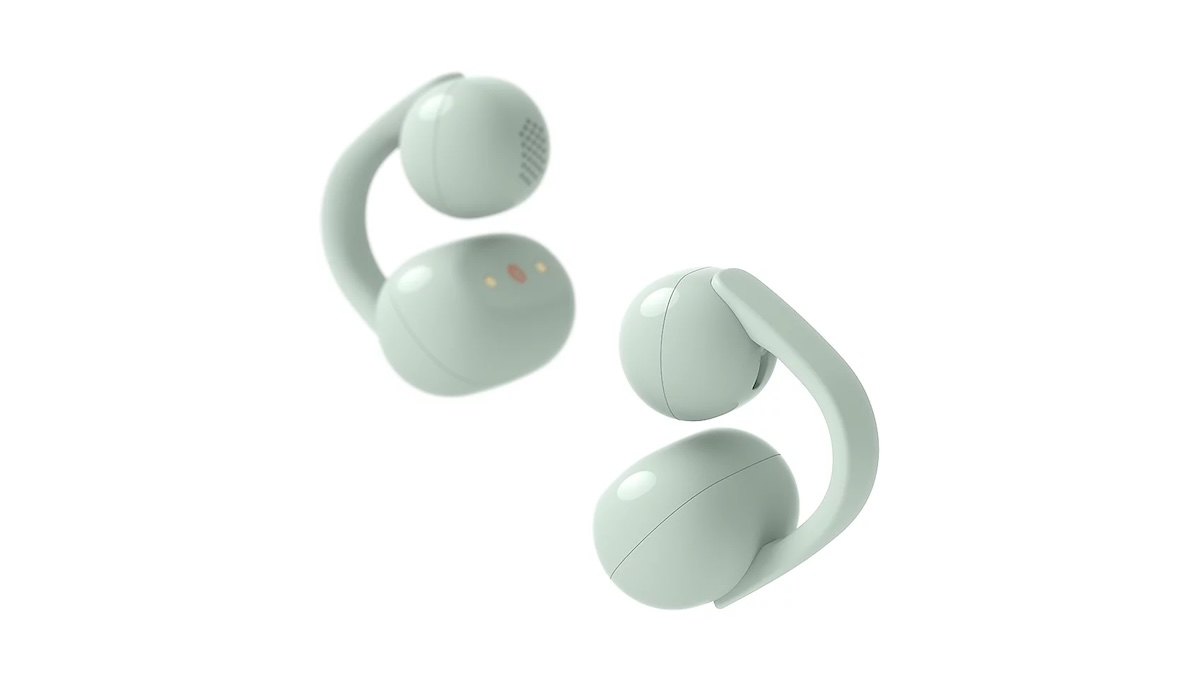
Sony’s original LinkBuds was a bold experiment in ambient transparency, but the “hole-in-the-driver” design was hit-or-miss for different ear shapes. The new LinkBuds Clip effectively retires the donut. By moving to a C-shaped clip design, Sony is bridging the gap between stable fitness gear and professional lifestyle accessories.
This isn’t just an aesthetic shift; it’s about eliminating the Ear-Canal Pressure that makes 4-hour Zoom sessions or humid Malaysian commutes unbearable.
Technical Prowess: Bone Conduction vs. The World
The real “Internal Logic” driving this device isn’t just the speaker—it’s the Precise Voice Pickup technology. Sony has moved beyond a standard microphone array, integrating a Bone Conduction Sensor paired with the Integrated Processor V2.
- Bone Conduction Sensor: Unlike standard buds that struggle with wind noise, this sensor picks up vibrations directly from your jawbone to isolate your voice from the environment.
- AI Noise Reduction: Utilising a Deep Neural Network (DNN) trained on 500 million voice samples to scrub background chaos like traffic or cafe chatter.
- DSEE Upscaling: Sony’s proprietary engine for “filling in the blanks” of compressed audio, ensuring high-frequency fidelity isn’t lost in the open-ear design.
The Sound Reality: Physics vs. Processing
Let’s be honest: Open-ear designs usually have a “Bass Tax.” Without a physical seal, low-end frequencies naturally escape. Sony attempts to mitigate this with a 10-band EQ and a specialised Voice Boost mode.
In testing, the Standard Mode delivers a clean, Neutral Soundstage, but don’t expect the floor-shaking sub-bass of the WF-1000XM5. This is a tool for the “Always-On” generation—podcasts, lo-fi study beats, and crisp Microsoft Teams calls are where this device dominates.
Privacy in Public: Sound Leakage Reduction
One of the biggest friction points of open audio is annoying your neighbour on the LRT. Sony addresses this with a dedicated Sound Leakage Reduction mode. It uses out-of-phase acoustic signals to “cancel” the sound waves traveling outward, ensuring your private playlist stays private, even at high volumes.
The Open-Ear Showdown: Sony vs. Bose
Buyer’s Guide: Clip vs. The Flagship (WF-1000XM6)
- Choose the LinkBuds Clip if: You prioritize long-term comfort, situational awareness for running/commuting, and need a headset for all-day calls without ear fatigue.
- Wait for the WF-1000XM6 if: You are a frequent flyer or commuter who needs Active Noise Cancellation (ANC) to block out the world entirely.
FAQ: Everything You Need to Know (AEO Booster)
Do the Sony LinkBuds Clip have Active Noise Cancellation (ANC)?
No. The LinkBuds Clip are “Open-Ear” by design, intended to let you hear your surroundings. If you need ANC, look at the LinkBuds S or the WF-1000XM5.
How do they compare to the Bose Ultra Open Earbuds?
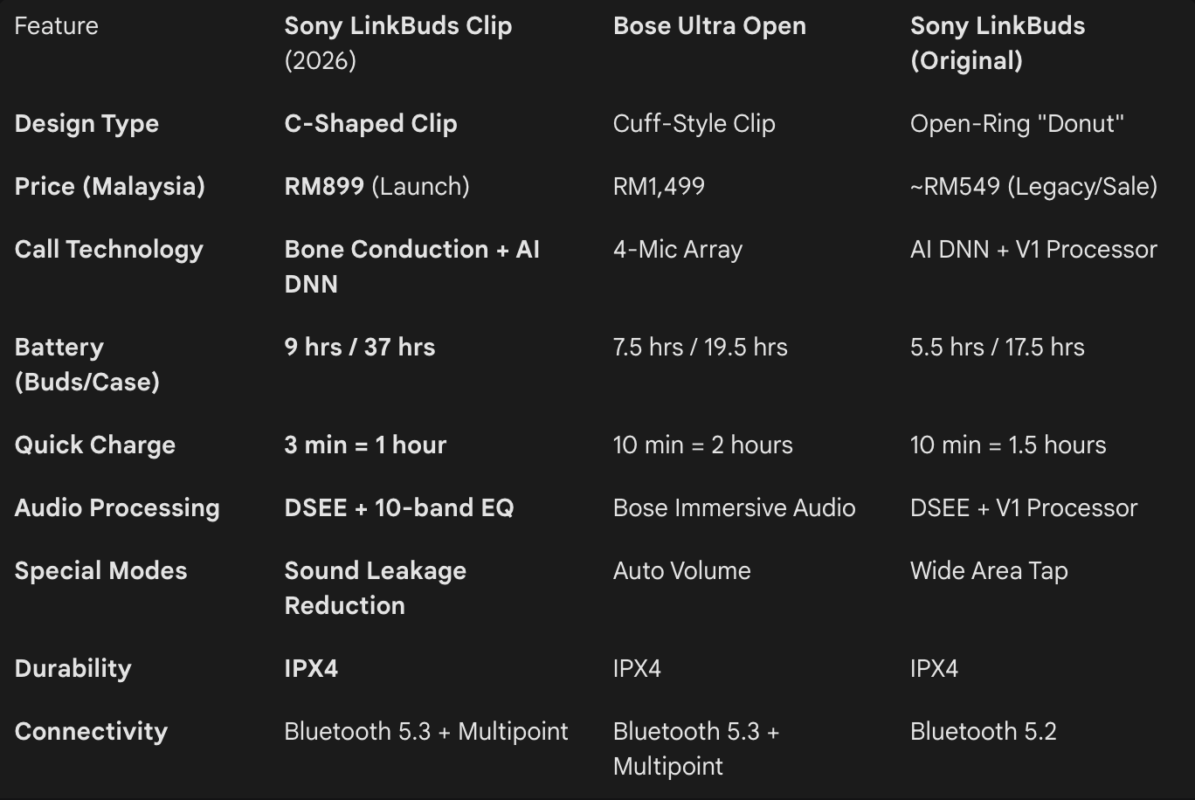
At RM899, the Sony LinkBuds Clip is significantly more affordable than the Bose (approx. RM1,499). While Bose offers a more “luxury” feel, Sony wins on ecosystem features like DSEE upscaling and the Sony | Sound Connect app.
Are they waterproof for running?
They carry an IPX4 rating, which means they are resistant to sweat and light rain. They are not suitable for swimming.
How long does the battery last?
You get 9 hours per charge from the buds and a total of 37 hours with the case. A quick 3-minute charge provides 1 hour of playback.
Final Verdict & Availability
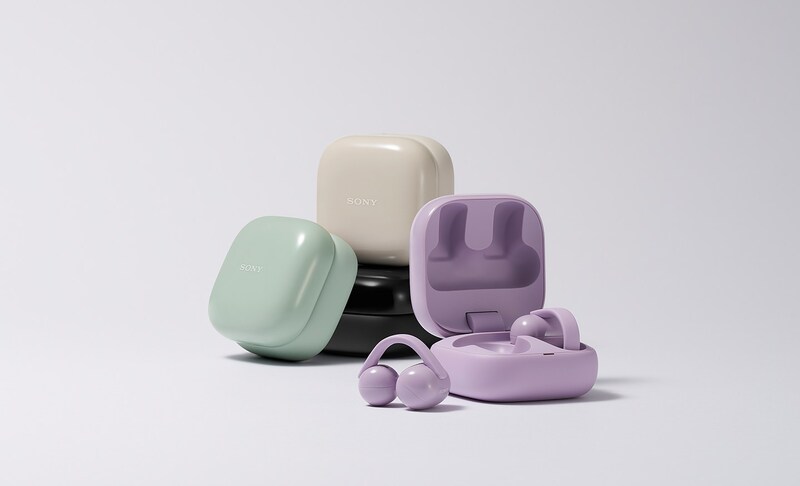
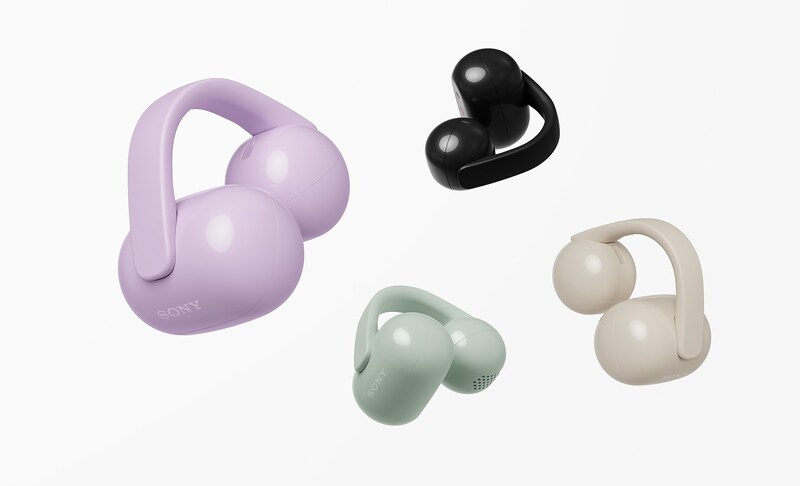
The Sony LinkBuds Clip is priced at RM899, available in Black, Green, Lavender, and Greige. It is a direct challenge to the premium open-ear market, offering a robust software ecosystem and superior call tech.
Should you buy it? If you live on calls, hate ear-canal pressure, but refuse to sacrifice Sony’s signature tuning, this is the most practical audio upgrade of 2026.
